Global Peanut Butter Trade: Export And Import Trends
The global food industry has evolved rapidly in recent years, driven by changing consumer preferences, expanding international trade, and increasing demand for convenient, nutritious products. Among these, peanut butter has emerged as a highly traded commodity across global markets. Understanding peanut butter export trends and peanut butter import trends is essential for businesses looking to grow in this competitive and expanding sector.
From developed economies to emerging markets, peanut butter is gaining popularity due to its nutritional value, versatility, and affordability. This blog explores how global trade dynamics are shaping the industry and what opportunities lie ahead for exporters, suppliers, and distributors.
What Is Driving the Growth of the Global Peanut Butter Market?
The global peanut butter market has seen consistent growth over the past decade. While peanut butter remains a dominant product, the category has expanded to include almond, cashew, and other nut-based spreads. However, peanut butter continues to lead due to its affordability and widespread acceptance.
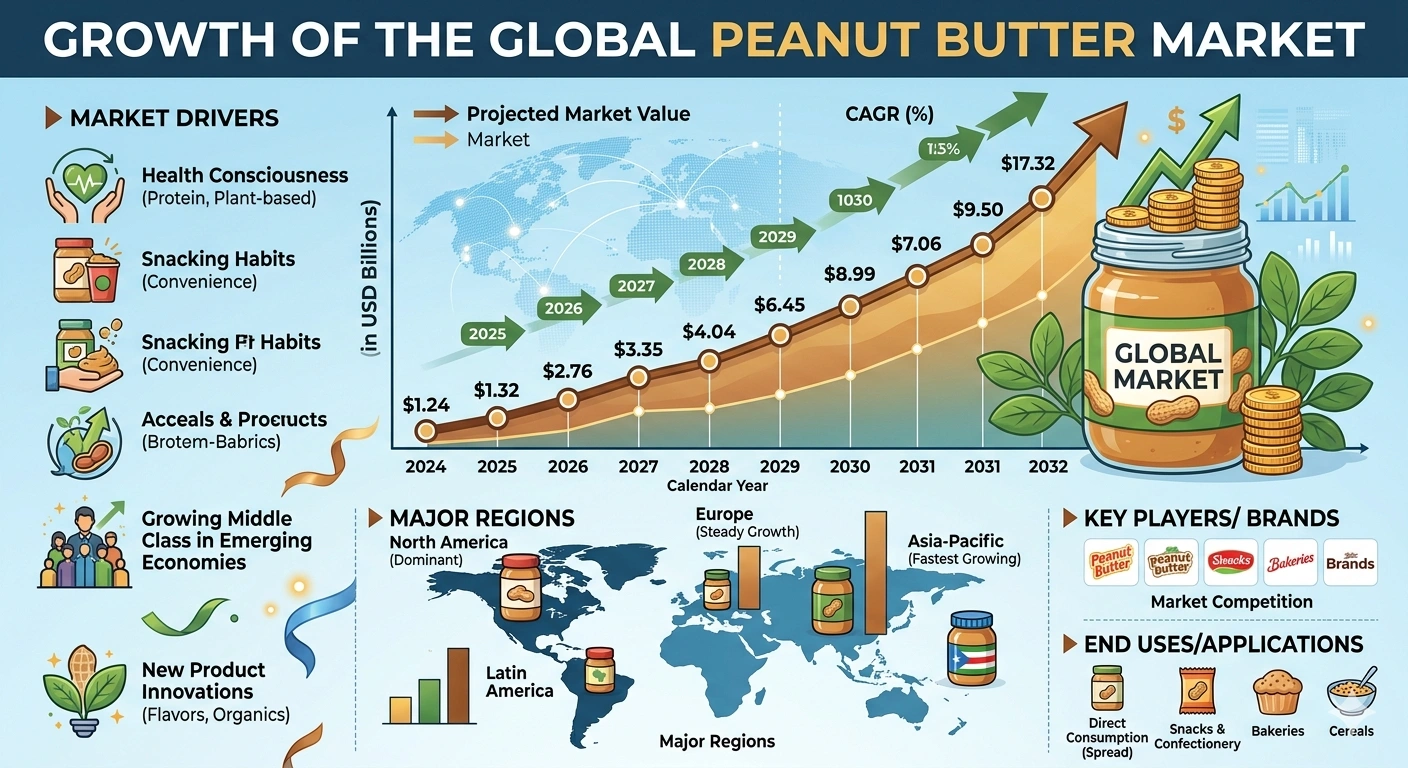
Several key drivers are fueling this growth:
-
Increasing demand for protein-rich foods
-
Rising awareness of plant-based diets
-
Expansion of retail and e-commerce platforms
-
Growing middle-class population in developing countries
These factors have significantly influenced both peanut butter export trends and peanut butter import trends, as more countries engage in trade to meet rising demand.
How Do International Food Trade Trends Impact the Industry?
Global trade does not operate in isolation. Broader international food trade trends significantly influence how peanut butter is produced, distributed, and consumed.
Key Influencing Factors:
-
Trade agreements and tariffs
-
Supply chain disruptions
-
Currency fluctuations
-
Food safety regulations
Businesses that align with these international food trade trends are better positioned to adapt to market changes and maintain competitiveness.
Peanut Butter Export Trends
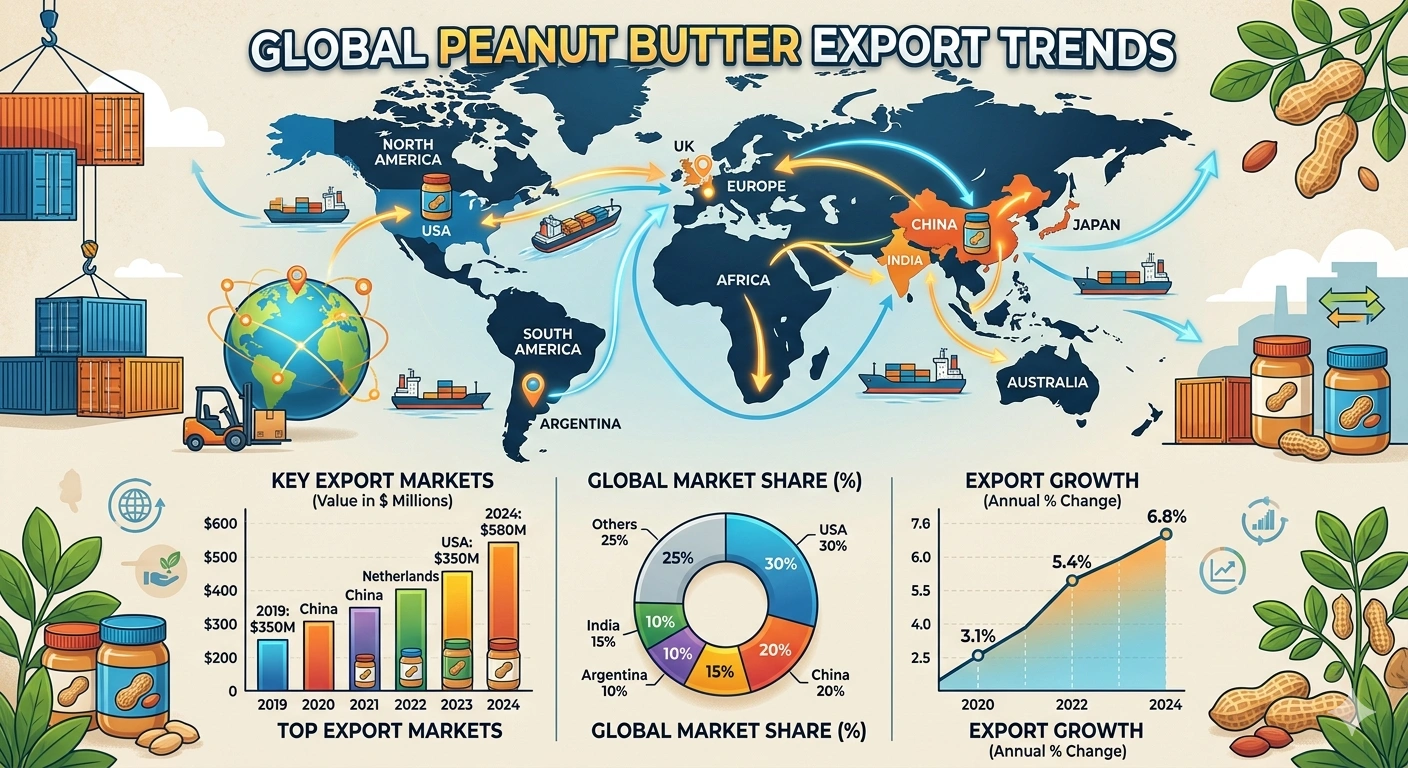
Analyzing peanut butter export trends provides valuable insights into how production and supply chains are adapting to global demand. Export activities have expanded beyond traditional producers, with new players entering the market.
Key Export Developments:
-
Growth in exports from Asia, particularly India and China
-
Increased focus on bulk supply for food service industries
-
Rising demand for private-label and customized products
-
Expansion into untapped markets in Africa and the Middle East
Countries with strong agricultural capabilities and efficient processing systems are gaining a competitive edge. Additionally, top exporting countries are leveraging advanced logistics and trade agreements to strengthen their global presence.
Top Food Exporting Countries
The role of top food exporting countries is crucial in shaping global trade patterns. These nations have well-established supply chains and strong export infrastructures.
Leading Exporters:
-
United States – A dominant player with advanced production technology
-
China – Known for large-scale manufacturing and competitive pricing
-
India – Emerging as a cost-effective and reliable exporter
-
Netherlands – A major hub for re-exports within Europe
These countries are continuously adapting to global demand, influencing both food export market trends and peanut butter export worldwide.
Peanut Butter Import Trends
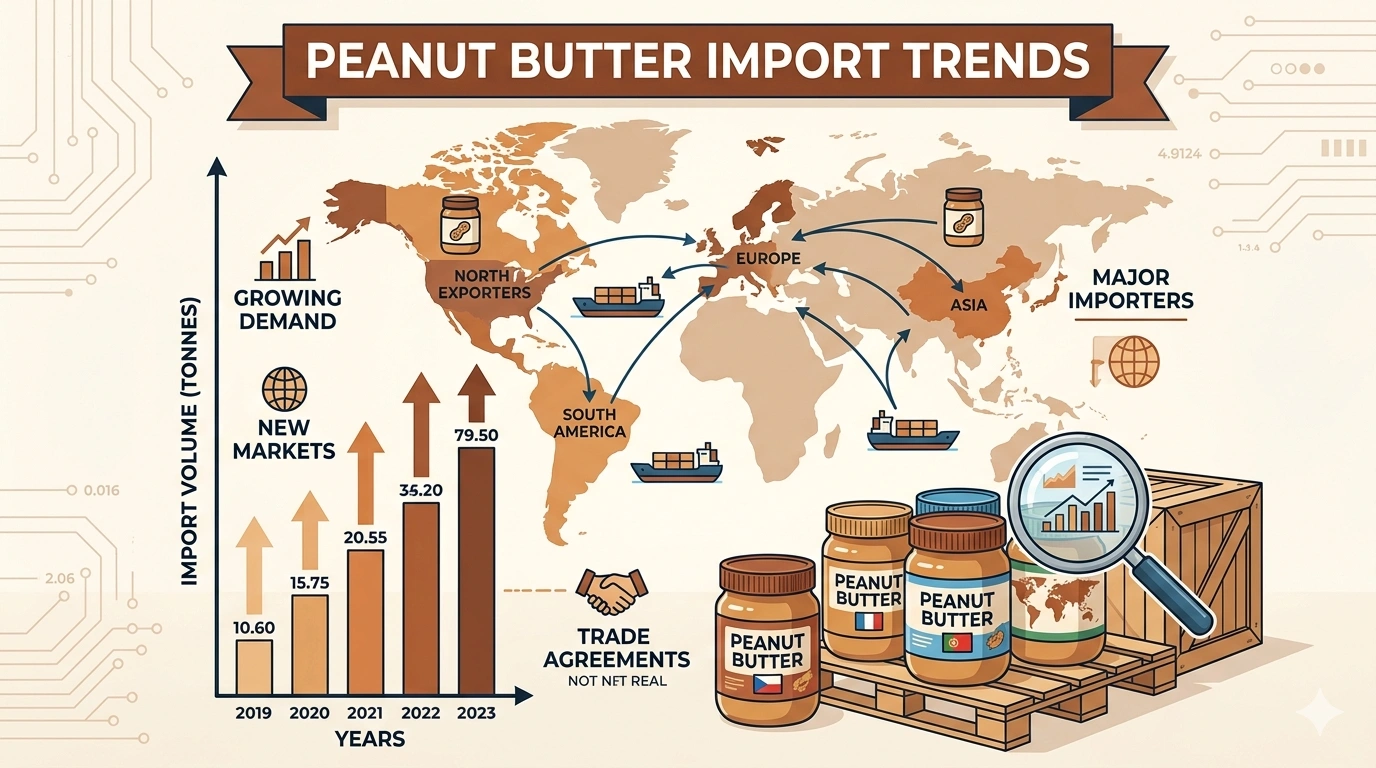
Understanding peanut butter import trends helps identify where demand is increasing and which markets offer growth opportunities. Many countries rely on imports due to limited domestic production.
Key Import Insights:
-
Rising demand in Asia-Pacific and Middle Eastern regions
-
Increased consumption in urban areas
-
Growth in retail and food service sectors
-
Higher demand for affordable protein sources
These trends highlight how top importing countries are expanding their consumption of peanut butter and related products.
Top Food Importing Countries
The demand side of the market is driven by top food importing countries that rely on global suppliers to meet local consumption needs.
Major Importing Nations:
-
United Kingdom
-
Germany
-
Japan
-
United Arab Emirates
-
Saudi Arabia
These countries play a key role in shaping peanut butter import trends, offering lucrative opportunities for exporters.
What Role Do Peanut Butter Wholesale Suppliers Play?
Peanut butter suppliers play a vital role in connecting producers with global markets. They ensure efficient distribution and availability of products across different regions.
Importance of Suppliers:
-
Facilitate bulk trade and large-scale distribution
-
Support restaurants, retailers, and food service providers
-
Maintain consistent supply chains
-
Offer competitive pricing for international buyers
Their contribution is essential in sustaining both peanut butter export trends and peanut butter import trends.
How Is the Supply Chain Adapting to Global Demand?
The peanut butter supply chain has become more sophisticated, integrating technology and logistics to meet growing demand.
Key Developments:
-
Adoption of automation in production
-
Improved storage and transportation systems
-
Expansion of global distribution networks
-
Increased focus on sustainability
These advancements support the growth of the global nut spread market and ensure efficient trade operations.
What Challenges Affect the Global Peanut Butter Trade?
Despite its growth, the industry faces several challenges that impact trade dynamics.
Major Challenges:
-
Fluctuating raw material prices
-
Strict international regulations
-
Supply chain disruptions
-
Competition from alternative spreads
Addressing these challenges is essential for maintaining steady peanut butter export trends and peanut butter import trends.
How Can Businesses Leverage Market Opportunities?
Companies can capitalize on global demand by adopting strategic approaches.
Growth Strategies:
-
Expanding into emerging markets
-
Partnering with reliable distributors
-
Offering innovative product variants
-
Investing in branding and packaging
By aligning with food export market trends and understanding international food trade trends, businesses can strengthen their global presence.
About Nutrionex Foods
Nutrionex Foods is a trusted name in the food industry, specializing in high-quality peanut-based products. With a strong focus on innovation, quality, and customer satisfaction, the company actively participates in global trade.
By closely monitoring peanut butter export trends and peanut butter import trends, Nutrionex Foods ensures its offerings meet international standards and evolving market demands. The company collaborates with peanut butter wholesale suppliers and distributors worldwide, making it a reliable partner for businesses seeking consistent quality and supply.
What Does the Future Hold for the Global Peanut Butter Market?
The future of the global nut spread market looks promising, with continued expansion expected across regions.
Future Outlook:
-
Rising demand in developing economies
-
Growth in health-conscious consumer segments
-
Increased innovation in product offerings
-
Expansion of digital and e-commerce channels
These developments will continue to shape peanut butter export trends and peanut butter import trends in the coming years.
Conclusion
The global peanut butter trade is experiencing significant growth, driven by increasing demand, expanding markets, and evolving consumer preferences. Understanding peanut butter export trends and peanut butter import trends is crucial for businesses aiming to succeed in this dynamic industry.
With strong contributions from top food exporting countries and growing demand from top food importing countries, the opportunities are vast. By aligning with international food trade trends, leveraging food export market trends, and working with reliable peanut butter wholesale suppliers, businesses can unlock new growth avenues and establish a strong global presence.
Frequently Asked Questions
1. What are peanut butter export trends?
Peanut butter export trends refer to the patterns in which peanut butter is shipped from producing countries to international markets.
2. What are peanut butter import trends?
Peanut butter import trends highlight how countries purchase peanut butter based on local demand and consumption.
3. Which countries are the top exporters?
The United States, China, India, and the Netherlands are among the top food exporting countries in this segment.
4. Which countries import the most peanut butter?
Countries like the UK, Germany, and the UAE are among the top food importing countries.
5. How can businesses enter the global peanut butter market?
Businesses can enter by understanding international food trade trends, partnering with distributors, and following food export market trends.