Natural Peanut Butter Exporter To Kenya From India
Peanut butter is a practical choice for consumers who want a convenient, protein-rich spread. It works well at breakfast, in snacks, and in many food-service recipes. This creates opportunities for Kenyan supermarkets, health-food stores, online brands, cafés, and distributors.
However, choosing a natural peanut butter exporter to Kenya takes more than comparing prices. Buyers must review food safety, product consistency, packaging, labeling, shelf-life evidence, and export support. This guide explains what Kenyan businesses should check when sourcing natural peanut butter from India, including creamy, crunchy, unsweetened, bulk, and private-label options.
Why Natural Peanut Butter Appeals to Kenyan Buyers
Demand for Convenient, High-Protein Foods
Natural peanut butter can serve as a healthy breakfast spread or a quick snack ingredient. Consumers can add it to porridge, smoothies, sandwiches, baked goods, and sauces. It also appeals to fitness-focused shoppers looking for high protein peanut butter products.
Its simple format makes it suitable for homes, cafés, hotels, bakeries, schools, and institutional kitchens. Retailers may also offer different pack sizes for families, individual shoppers, and food-service customers.
Importers should still study their target market before placing an order. Current retailer assortments, online search activity, customer feedback, and distributor experience can help identify suitable flavors, textures, and pack sizes.
Retail and Private-Label Opportunities
Different sales channels have different needs. A premium grocery store may prefer glass jars and a simple ingredient list. A family retailer may prioritize value, spreadability, and practical plastic packaging. Bakeries and cafés may need bulk natural peanut butter for Kenya in food-service containers.
- Supermarkets and convenience stores
- Health-food and sports nutrition shops
- Hotels, cafés, bakeries, and caterers
- Online grocery and direct-to-consumer brands
- Retailers developing private-label ranges
What Qualifies as Natural Peanut Butter?
Natural Peanut Butter vs Regular Peanut Butter
Natural peanut butter commonly contains roasted peanuts, with optional salt. Regular products may also include sugar, stabilizers, or hydrogenated vegetable oils. The exact recipe can vary, so buyers should always review the product specification and ingredient declaration.
The word “natural” does not automatically mean organic, unsweetened, preservative-free, or free from added oils. Claims on the packaging must match the recipe and comply with current Kenyan labeling rules.
Unsweetened and No Added Sugar Options
Unsweetened peanut butter is designed for buyers who prefer a peanut-led taste without added sweeteners. A no added sugar peanut butter does not contain sugar added during production, but peanuts may contain naturally occurring sugars.
Importers should be careful with “sugar-free” claims. These claims may have specific legal conditions. The product label, nutritional panel, and laboratory information should support every statement made to consumers.
Organic, Vegan and Gluten-Free Products
Organic peanut butter should only be sold as organic when the claim is backed by recognized certification and controlled sourcing. Buyers should request current documents rather than relying on a product name or sales description.
A peanut-only recipe is generally suitable for a vegan peanut butter range. However, the complete ingredient list and processing controls still need review. In the same way, gluten-free peanut butter claims should be supported by suitable contamination controls and testing where required.
Creamy, Crunchy or Bulk: Choosing a Product
Creamy Natural Peanut Butter
Creamy natural peanut butter has a fine and even grind. Its smooth peanut butter texture works well for sandwiches, smoothies, porridge, sauces, and family retail packs. Buyers should assess spreadability, flavor, grind size, and consistency between batches.
Oil separation may occur when a natural recipe does not use stabilizers. This does not always mean the product is defective. Clear stirring and storage directions can help consumers use it correctly.
Crunchy Natural Peanut Butter
Crunchy natural peanut butter includes peanut pieces for added bite. The crunchy peanut butter texture can appeal to consumers who want a less uniform eating experience.
Particle size matters. If the pieces are too large or vary between batches, filling and consumer use may be affected. Buyers should approve a clear product specification covering texture, appearance, taste, and acceptable variation.
Bulk and Retail Formats
An international peanut butter supplier may provide retail jars, sample packs, or larger food-service formats, depending on current capabilities. Bulk products can suit bakeries, caterers, cafés, food manufacturers, and approved repacking operations.
Before approving a large order, request samples from more than one production batch where possible. This helps the buyer assess repeatability rather than judging one presentation sample.
How to Evaluate an Indian Peanut Butter Exporter

Check Manufacturing and Food-Safety Controls
A natural peanut butter manufacturer in India should be able to explain how it controls ingredients, production, storage, and batch release. Kenyan buyers should verify all licenses and certifications through current documents.
- Applicable FSSAI licensing
- Food-safety and HACCP-based procedures
- Raw material approval and traceability
- Cleaning and sanitation controls
- Peanut allergen management
- Batch coding and recall procedures
- Finished-product release processes
- Production capacity and export experience
Aflatoxin control is especially important for peanut products. Effective management begins with raw-peanut sourcing. It continues through storage, sorting, processing, testing, and the release of finished goods.
Request Specifications and Laboratory Reports
Product claims should be supported by evidence. Ask for a complete specification sheet, ingredient declaration, allergen statement, packaging details, and relevant laboratory results.
Testing discussions may cover aflatoxins, Salmonella, other microbiological parameters, moisture, and nutritional values. A supplier should also explain whether a Certificate of Analysis is available for commercial batches.
The stated peanut butter nutritional value should match verified product data. Do not assume that all recipes contain the same amount of protein, fat, sugar, or salt.
Manufacturer, Trader or Export Agent?
A direct manufacturer may offer greater visibility into formulation, testing, and production. A trader may source products from one or more factories. An export agent may help with shipment paperwork but may not control manufacturing.
None of these models is automatically unsuitable. The key is to identify who makes the product, who releases the batch, and who is responsible if a quality or documentation issue occurs.
What Should I Request Before Ordering?
- Product and packaging specifications
- Complete ingredient declaration
- Peanut allergen statement
- Samples and a written quotation
- Current licenses and applicable certificates
- Recent test report or Certificate of Analysis
- Minimum order quantity and lead time
- Validated shelf-life information
- Traceability and batch coding details
- Private-label and export documentation process
Kenya Compliance, Documents and Logistics
Confirm Import and Labeling Requirements
Natural peanut butter export from India to Kenya must follow the rules that apply on the shipment date. Importers should confirm current requirements with the Kenya Bureau of Standards, Kenya Revenue Authority, KenTrade, and a licensed customs-clearing professional.
Checks may include the applicable product standard, conformity procedures, ingredient labeling, allergen declarations, country of origin, and net contents. Labels may also need batch identification, manufacturing and best-before dates, storage directions, nutrition information, and importer or distributor details.
Do not rely on old tariff rates, contaminant limits, or label templates. Requirements can change, and the importer should approve the final label before commercial printing.
Common Export Documents
The documents required will depend on the order, route, and applicable regulations. A shipment may involve:
- Commercial invoice
- Packing list
- Bill of lading or air waybill
- Certificate of origin
- Certificate of Analysis
- Insurance certificate where applicable
- Health or conformity documents where required
- Product and packaging specifications
- Customs and import declarations
Shipping to Mombasa and Inland Delivery
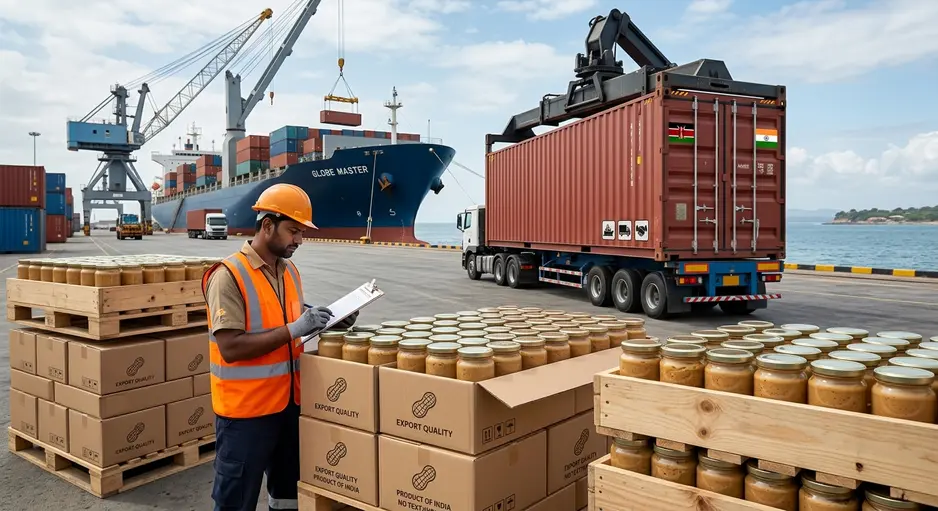
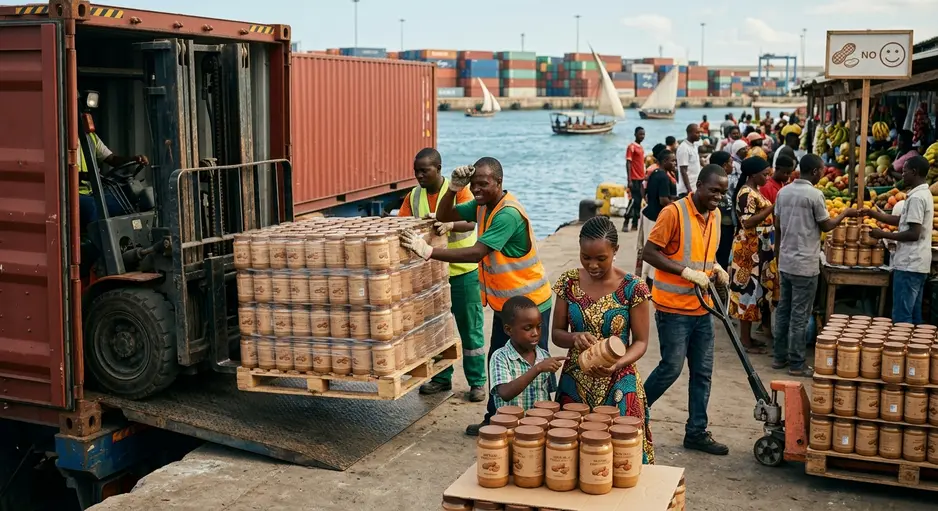
Sea freight may suit commercial volumes, while air freight can be useful for urgent samples. Commercial sea shipments can arrive through Mombasa before inland movement to Nairobi or other distribution points.
Buyers and suppliers should agree on Incoterms such as FOB, CFR, or CIF. These terms affect cost and responsibility, so each party must understand freight, insurance, port, and clearance duties. Transit times should be confirmed with the selected carrier rather than assumed.
Packaging, Shelf Life and Stability
Peanut Butter Packaging Options
Suitable packaging helps protect the product from oxygen, leakage, contamination, and handling damage. Available peanut butter packaging options may include food-grade plastic jars, glass jars, single-serve portions, and food-service pails, subject to supplier capability.
Buyers should assess closure integrity, tamper evidence, oil resistance, carton strength, and container efficiency. Glass may support premium positioning, while plastic can reduce weight and breakage risk. The final choice should match the sales channel and transport conditions.
How Long Does Natural Peanut Butter Last?
Peanut butter shelf life depends on the recipe, processing method, oxygen exposure, packaging, and storage conditions. There is no universal period that applies to every product.
Ask the supplier for validated shelf-life evidence. Warm storage and prolonged contact with oxygen may speed up rancidity. The stated best-before period should reflect actual testing and expected distribution conditions.
Why Does Oil Separation Happen?
Oil can rise to the top when natural peanut butter does not contain stabilizers. Stirring often restores the expected consistency. Labels should include clear storage and usage instructions.
For Kenya-bound products, performance should be assessed under expected transport, warehouse, and retail conditions. This is especially useful for preservative-free peanut butter and formulations without stabilizers.
Private Label and Commercial Buying
Creating a Private-Label Range
Private label natural peanut butter allows retailers and food brands to sell products under their own identity. A typical project begins with a buyer brief and moves through formulation, samples, packaging, compliance review, and commercial production.
- Define the market and target customer
- Select creamy or crunchy texture
- Approve ingredients and salt level
- Review samples and specifications
- Choose packaging and label content
- Complete regulatory checks
- Confirm quotation, MOQ, and terms
- Approve production and quality release
- Prepare export documents and shipment
Questions About MOQ and Pricing
Ask about the minimum order quantity for each SKU, trial-order options, packaging costs, label charges, carton configuration, lead time, payment terms, and sample fees. Importers should also confirm whether the shipment will be palletized or floor-loaded.
The best natural peanut butter for retail is not the same for every business. The right option depends on the customer, price point, pack size, ingredient expectations, desired texture, shelf-life needs, and retailer margin.
Natural Peanut Butter Exporter to Kenya
Source Natural Peanut Butter with Confidence
Successful sourcing depends on more than finding the lowest quote. Food safety, batch consistency, honest labeling, secure packaging, validated shelf life, and reliable documentation all matter.
Kenyan importers and any peanut butter distributor in Kenya can consider Nutrionex Foods when evaluating supplier options. Request current product specifications, formulations, samples, certifications, packaging choices, MOQs, and shipment terms directly from the company before making a commercial decision.
By completing these checks early, buyers can reduce risk and select a natural peanut butter exporter to Kenya that fits their retail, food-service, or private-label plans.
Frequently Asked Questions
1. Is natural peanut butter healthier than regular peanut butter?
It often has a simpler ingredient list and may contain less added sugar or fewer stabilizers. However, health depends on the exact recipe, serving size, and overall diet. Buyers should compare verified nutrition labels.
2. Is natural peanut butter high in protein?
Peanut butter can contribute protein to the diet, but the amount varies by formulation and serving size. Refer to the verified nutritional panel for the specific product.
3. Does preservative-free peanut butter need refrigeration?
Storage requirements depend on the validated recipe and packaging. Importers and consumers should follow the instructions printed on the product label.
4. Can Kenyan retailers order private-label products?
This depends on the manufacturer’s current formulation, packaging, minimum order, and label-support capabilities. Buyers should request written details before planning a launch.