Shelf Life Of Peanut Butter For Export: What Buyers Must Know
Introduction
Peanut butter is widely exported to many countries, making product quality and stability very important for global buyers. One key factor importers always check before placing bulk orders is the Shelf Life of Peanut Butter.
For exporters like Nutrionex Foods, maintaining a reliable shelf life ensures the product stays fresh during shipping, storage, and distribution. The Shelf Life of Peanut Butter depends on raw material quality, processing standards, packaging, and proper storage conditions.
Understanding these aspects helps buyers make better purchasing decisions and ensures the product performs well in international markets.
What Determines the Shelf Life of Peanut Butter?
Several technical and formulation factors influence the Shelf Life of Peanut Butter, especially when it is produced for international markets. The first major factor is ingredient composition. The natural oil content in peanuts makes the product prone to oxidation. Stabilizers are often added in commercial formulations to prevent oil separation and improve Peanut Butter Shelf Stability. Some manufacturers may also use approved preservatives to extend freshness without compromising safety.
Processing methods also play a crucial role. Proper roasting eliminates excess moisture and reduces microbial risk. Controlled grinding and homogenization help maintain texture consistency, which directly impacts the Commercial Peanut Butter Shelf Life in bulk packaging.
Moisture control is equally important. Even slight contamination during production can shorten product longevity. Strict hygiene standards and HACCP protocols are essential in export manufacturing facilities.
Finally, packaging technology significantly affects durability. Airtight containers, oxygen barriers, and tamper-proof sealing help reduce oxidation and maintain product integrity during storage and long-distance shipping.
Factors That Affect the Shelf Life of Peanut Butter
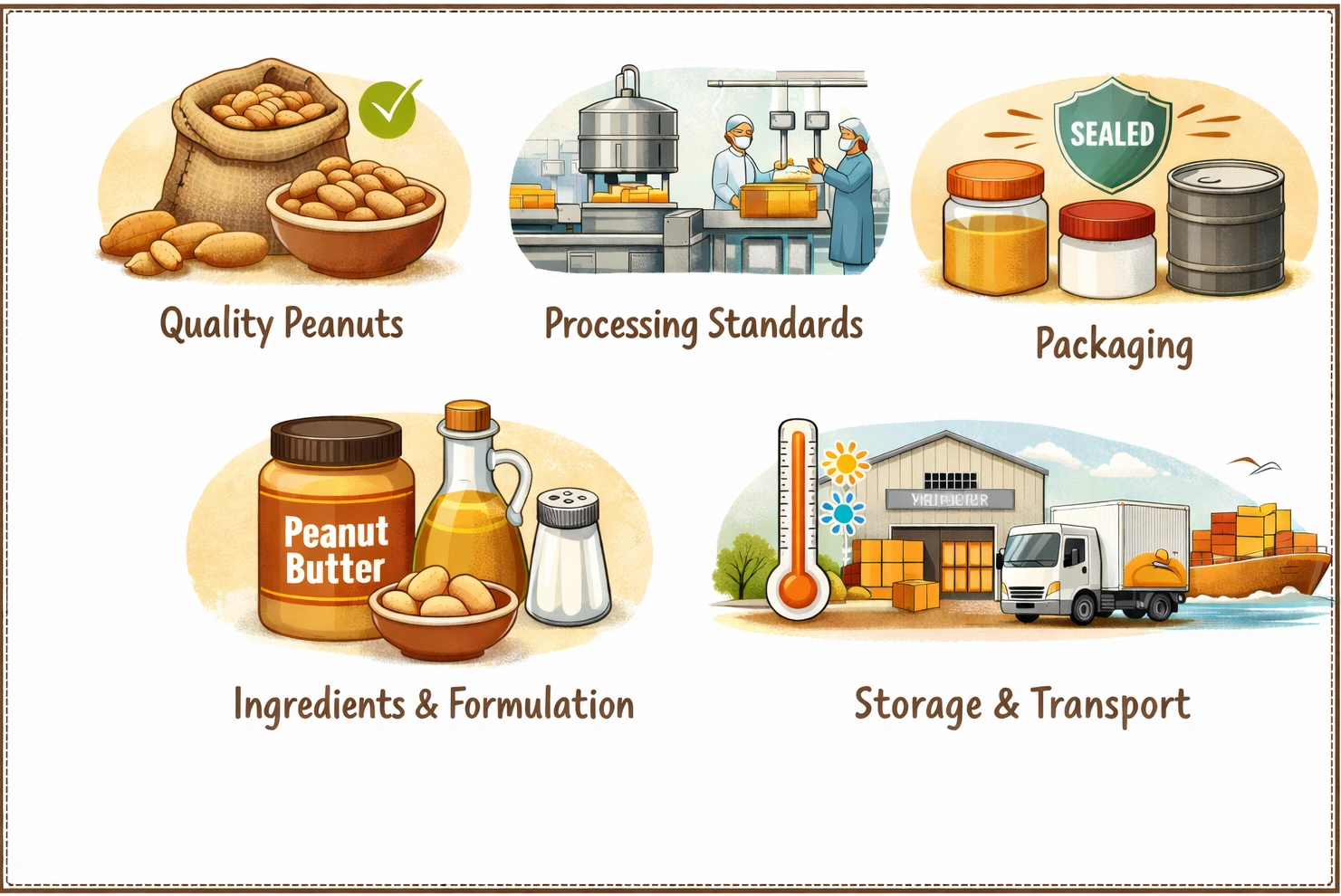
Several factors influence how long peanut butter remains fresh and safe for consumption, especially when it is exported to international markets. Understanding these elements helps buyers evaluate product reliability and long-term usability.
1. Quality of Raw Peanuts
The shelf life of peanut butter begins with the quality of the peanuts used during production. High-grade peanuts with low moisture content reduce the chances of spoilage and contamination. Proper roasting and processing also help improve flavor stability and overall product quality.
2. Manufacturing and Processing Standards
Hygienic manufacturing practices and controlled processing conditions play an important role in maintaining Peanut Butter Export Quality. Facilities that follow strict food safety standards usually produce peanut butter that lasts longer and performs better in global distribution channels.
3. Ingredients and Formulation
The ingredients used in peanut butter can influence its durability. Natural peanut butter may have a shorter shelf life due to the absence of stabilizers. Commercial formulations often include salt, vegetable oils, or stabilizing agents that help improve Peanut Butter Shelf Stability and prevent rapid oil separation.
4. Packaging Methods
Packaging is another key factor affecting product life. Airtight containers such as PET jars, glass jars, and bulk export packaging help protect peanut butter from air, moisture, and contamination. Proper sealing ensures the product remains stable during long shipping periods.
5. Storage and Transportation Conditions
Temperature and humidity during storage and transportation can impact product freshness. Maintaining suitable conditions throughout the supply chain supports proper Peanut Butter Storage Guidelines and helps preserve the product until it reaches its destination.
Commercial Peanut Butter Shelf Life in Global Trade
In international markets, buyers usually expect a stable and long-lasting product that can handle shipping, storage, and retail distribution. The Commercial Peanut Butter Shelf Life typically ranges between 12 to 24 months, depending on the formulation, packaging, and processing methods used by the manufacturer.
Export-focused manufacturers design products specifically to meet global supply chain requirements. This includes improving Peanut Butter Shelf Stability through controlled roasting, proper ingredient balance, and airtight packaging. These steps help ensure the product maintains its taste, texture, and safety over time.
Before exporting, many suppliers also conduct shelf-life testing and quality checks. These tests help confirm that the product will remain safe and maintain quality throughout transportation and storage in international markets. Buyers often review these details before finalizing bulk purchase agreements.
Peanut Butter Expiry Date vs Best Before Date
In food exports, understanding the difference between an expiry date and a best-before date is important for buyers and distributors. These labels help determine how long a product will maintain its quality and safety in international markets.
The Peanut Butter Expiry Date usually indicates the final date until the product is considered safe to consume when stored properly. On the other hand, the best-before date refers to the period during which peanut butter maintains its best taste, texture, and overall quality.
For international buyers, reviewing the expiration date of peanut butter is a key step before approving shipments. Importers often check the manufacturing date, batch details, and remaining shelf life to ensure the product will remain suitable for distribution in their market.
In addition, exporters must follow international food labeling regulations. Proper labeling helps maintain transparency, builds buyer confidence, and ensures compliance with global import standards.
Peanut Butter Shelf Life for Export: Key Factors Buyers Must Evaluate
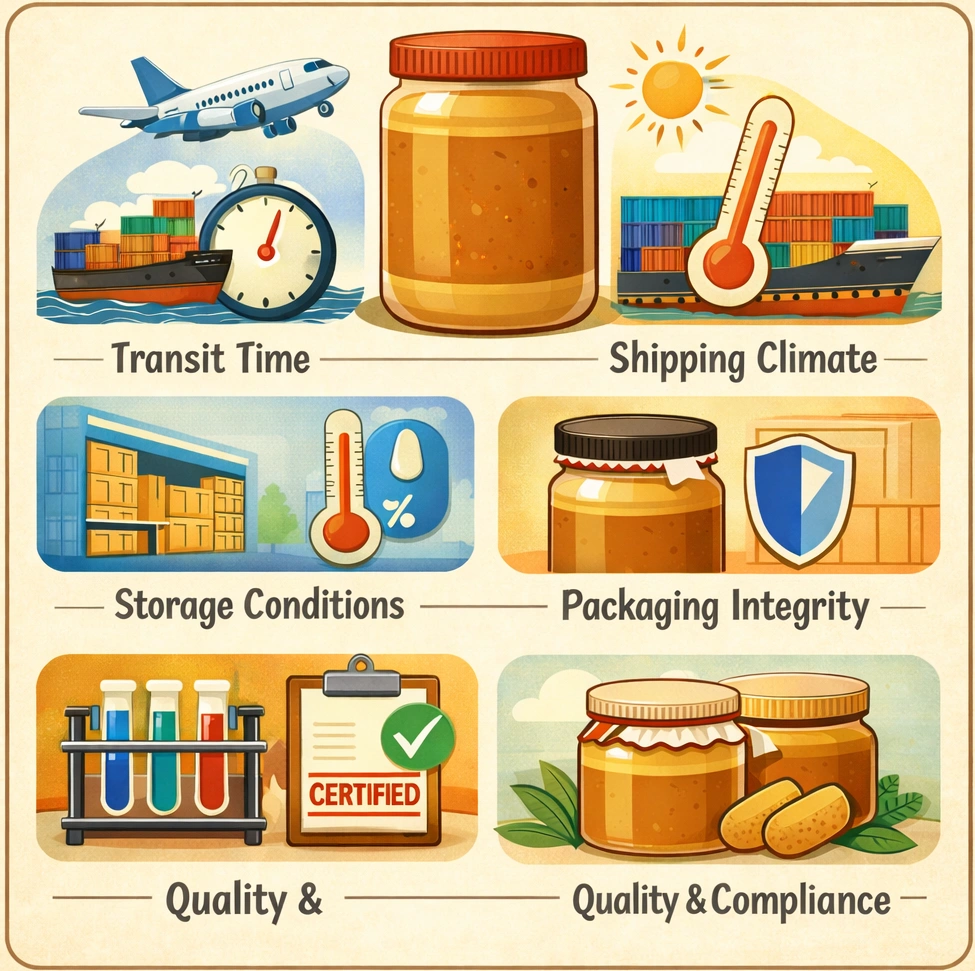
When assessing Peanut Butter Shelf Life for Export, buyers must evaluate several logistical and quality-related factors. Export shipments face extended handling and environmental exposure, making detailed review essential.
-
Transportation Time: Sea freight can take several weeks, especially for intercontinental shipments. Air freight is faster but more expensive. Longer transit periods increase exposure to temperature variations, which may affect product stability.
-
Climate Conditions During Shipping: Peanut butter is sensitive to heat. High temperatures accelerate oil oxidation and can reduce shelf stability. Exporters often use temperature-controlled containers or proper insulation to minimize risk.
-
Storage Conditions at Destination: Warehousing practices significantly influence product longevity. Buyers should ensure storage in cool, dry environments with controlled humidity to maintain quality until distribution.
-
Packaging Integrity During Transit: Strong, airtight packaging prevents oxygen exposure and contamination. Tamper-proof seals, food-grade containers, and moisture barriers help protect product quality during handling.
-
Export Documentation & Quality Assurance: Proper certification, lab reports, and compliance documentation validate product safety. Quality assurance testing ensures that the product meets declared shelf-life standards before shipment.
Careful evaluation of these factors helps buyers protect inventory value and maintain consistent product performance in global markets.
Peanut Butter Storage Guidelines for Maximum Shelf Stability
Following proper Peanut Butter Storage Guidelines is essential to maintain freshness, safety, and overall product quality during export and distribution. Even high-quality production can be compromised if storage conditions are not properly controlled.
-
Ideal Storage Temperature and Humidity: Peanut butter should be stored in a cool, dry place, ideally between 15°C to 25°C. Excess heat accelerates oxidation and may reduce Peanut Butter Shelf Stability. Relative humidity should remain low to prevent condensation and packaging damage.
-
Warehouse Best Practices: Warehouses should be clean, pest-controlled, and well-ventilated. Pallets must be kept off the floor and away from direct sunlight. FIFO (First In, First Out) inventory management ensures that older batches are distributed first, reducing the risk of expiry.
-
Container Loading Practices for Export: During export, containers should be dry and free from odor contamination. Proper pallet stacking prevents crushing or seal damage. Temperature monitoring during long-distance shipments further protects product integrity.
-
Avoiding Oil Separation and Rancidity: Stable formulations and airtight packaging help prevent oil separation. Limiting exposure to oxygen and heat reduces the risk of rancidity and preserves flavor consistency throughout storage.
Quality Testing & Certifications for Peanut Butter Export Quality
Maintaining strong Peanut Butter Export Quality requires strict testing protocols and internationally recognized certifications. Global buyers rely on documented quality assurance to ensure safety, compliance, and long-term product stability.
-
Microbial Testing: Regular laboratory testing checks for harmful microorganisms such as Salmonella, E. coli, and yeast or mold. These tests confirm that the product is safe for consumption and suitable for international distribution.
-
Aflatoxin Control: Peanuts are naturally vulnerable to aflatoxin contamination if not properly handled. Export-grade manufacturers conduct advanced aflatoxin testing to ensure levels remain within international regulatory limits. This is a critical factor in export approvals.
-
Moisture Analysis: Controlled moisture levels are essential for product stability. Excess moisture can reduce shelf life and increase spoilage risk. Accurate moisture testing helps maintain consistent quality and supports longer storage.
-
HACCP, ISO, FDA, and FSSAI Compliance: Certifications such as HACCP and ISO demonstrate structured food safety management systems. Compliance with FDA, FSSAI, and other regulatory bodies strengthens credibility and builds buyer trust.
Challenges in Maintaining Peanut Butter Shelf Life in Export Markets
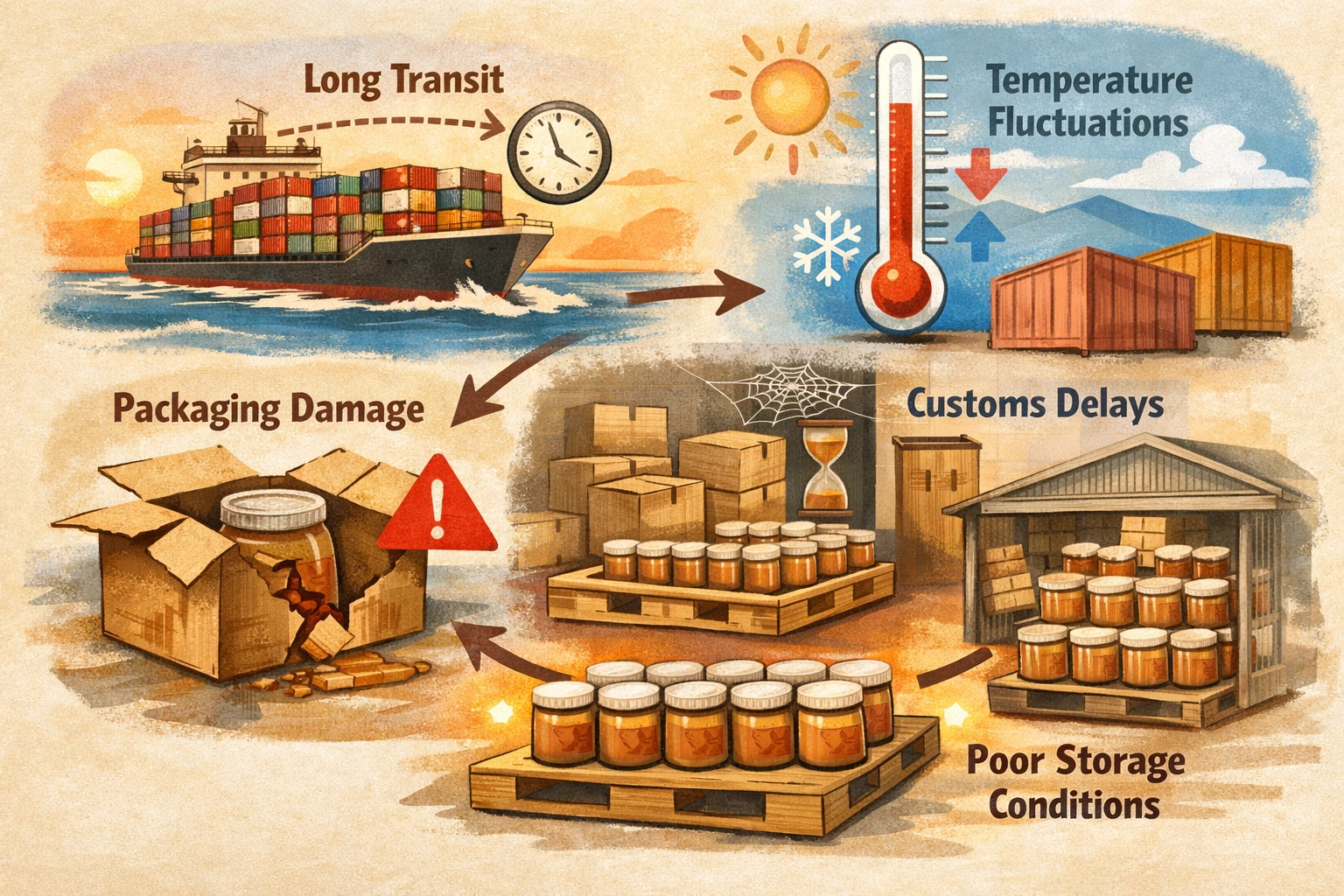
Maintaining the Shelf Life of Peanut Butter in export markets can be challenging due to multiple logistical and environmental factors. Even when produced under strict quality controls, external conditions during transit and distribution may affect product stability.
-
Long Transit Durations: Sea shipments can take several weeks, especially for distant markets. Extended travel time increases exposure to environmental stress, which may impact freshness if not properly managed.
-
Temperature Fluctuations: Peanut butter is sensitive to heat. High temperatures accelerate oil oxidation and may reduce overall shelf stability. Sudden climate changes between origin and destination can also affect texture and consistency.
-
Packaging Damage Risks: Rough handling during loading and unloading can compromise seals or cause minor cracks in containers. Damaged packaging increases the risk of contamination and reduces product durability.
-
Customs Delays: Unexpected delays at ports may extend storage in uncontrolled environments, potentially impacting product quality and declared shelf life.
-
Storage Mishandling at Destination Warehouses: Improper stacking, exposure to direct sunlight, or poor humidity control can shorten shelf stability. Strict adherence to recommended storage practices is essential to preserve quality after arrival.
Why Shelf Life Matters for Global Peanut Butter Buyers
Shelf life is important for international buyers because it affects how smoothly the product moves through the supply chain. A reliable Shelf Life of Peanut Butter allows enough time for shipping, customs clearance, warehousing, and distribution.
It also ensures better retail shelf availability, giving stores enough time to sell the product before the Peanut Butter Expiry Date. This helps maintain product quality, customer satisfaction, and food safety.
For importers, longer shelf life also supports better inventory planning and reduces the risk of financial losses due to expired stock.
Why Nutrionex Foods Is a Trusted Global Peanut Butter Exporter
Nutrionex Foods is a trusted global peanut butter exporter committed to delivering consistent quality and long-lasting product stability. With strict manufacturing standards, validated shelf-life testing, and advanced packaging solutions, the company ensures that every shipment maintains freshness during international transit. Strong compliance with global food safety regulations, along with efficient export documentation and supply chain management, helps protect product integrity from production to destination. By prioritizing quality control and reliable logistics, Nutrionex Foods supports buyers seeking dependable peanut butter solutions for competitive global markets.
Conclusion
The Shelf Life of Peanut Butter is a critical factor in export success. It directly impacts product safety, customer satisfaction, and brand reputation in international markets.
Strong manufacturing practices, proper storage, reliable packaging, and strict quality testing help maintain shelf stability during long transit periods. Exporters must follow food safety standards and ensure full regulatory compliance to protect product integrity.
For buyers, selecting trusted suppliers with proven quality systems ensures consistent performance and reduces risk. Prioritizing shelf-life validation and storage control ultimately supports smooth global trade and long-term business growth.
Frequently Asked Questions
1. How long does peanut butter last unopened?
Unopened peanut butter usually lasts 12 to 24 months when stored in a cool, dry place.
2. What is the expiration date of peanut butter for export shipments?
For export, the expiration date of peanut butter is typically up to 24 months from the manufacturing date, depending on testing and compliance standards.
3. Does refrigeration increase peanut butter shelf life?
Yes. Refrigeration slows oxidation and helps maintain freshness, especially after opening.
4. How long can peanut butter last in bulk packaging?
In sealed bulk containers, peanut butter can last 18 to 24 months under proper storage conditions.
5. What affects peanut butter shelf life during shipping?
Transit time, temperature changes, packaging quality, humidity, and storage handling directly impact shelf stability.