Peanut Butter Vs Protein Powder: Which Builds Muscle Better?
When it comes to muscle building, protein is one of the most important nutrients your body needs. Two popular options people often compare are peanut-based spreads and protein supplements. Both are widely used in fitness diets, but they work in different ways for muscle growth. This guide explains how each option supports strength training and helps you decide which is better for muscle building based on your goals, lifestyle, and nutrition needs.
Understanding Muscle Growth & Protein Requirements
What Is Muscle Hypertrophy?
Muscle growth, also known as hypertrophy, occurs when muscle fibers are stressed during resistance training and then repaired through proper nutrition. Protein plays a vital role in repairing these fibers, helping them become stronger and larger over time.
How Much Protein Do You Need to Build Muscle?
Protein needs depend on body weight and activity level:
-
Beginners: ~0.8–1g protein per kg of body weight
-
Active gym-goers: ~1.2–1.6g per kg
-
Advanced athletes: up to 2g per kg
Meeting your daily protein requirement consistently is more important than relying on one single protein source.
What Is Peanut Butter? Nutritional Overview
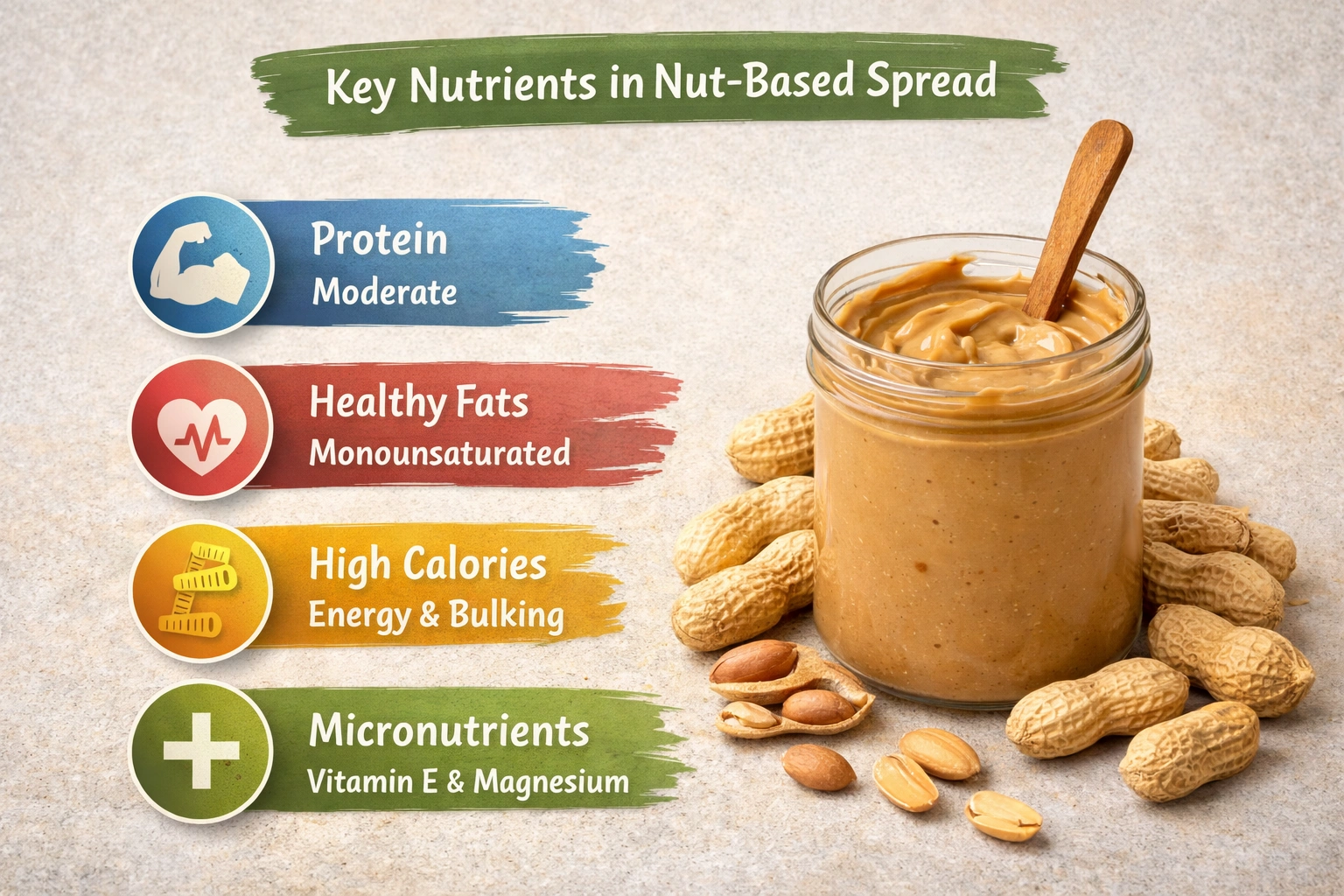
Key Nutrients in Nut-Based spread
This nut-based spread is a natural, calorie-dense food made from ground peanuts. It provides:
-
Moderate protein content
-
Healthy monounsaturated fats
-
High calories for energy and bulking
-
Micronutrients like vitamin E and magnesium
This makes peanut butter for muscle building especially useful during weight-gain or bulking phases.
Types of Nut Butter for Fitness Goals
-
Natural Peanut Butter: No added sugar or oils, ideal for clean eating
-
Organic Peanut Butter: Made from organically grown peanuts
-
Flavored Peanut Butter: Adds taste variety to fitness meals
-
Crunchy Peanut Butter: Contains peanut bits for texture
-
Creamy Peanut Butter: Smooth and easy to blend into shakes
What Is Protein Powder? Nutritional Overview
Common Types of Protein Powders
-
Whey protein (fast-digesting)
-
Plant-based protein (pea, rice, soy)
-
Casein protein (slow-digesting)
Each option supports protein powder for muscle growth depending on timing and fitness goals.
Nutritional Benefits of Protein Supplements
-
High protein concentration per serving
-
Low fat and carbohydrates (varies by type)
-
Fast absorption, especially post-workout
-
Easy to measure and consume
Peanut-Based Spread vs Protein Powder for Muscle Building
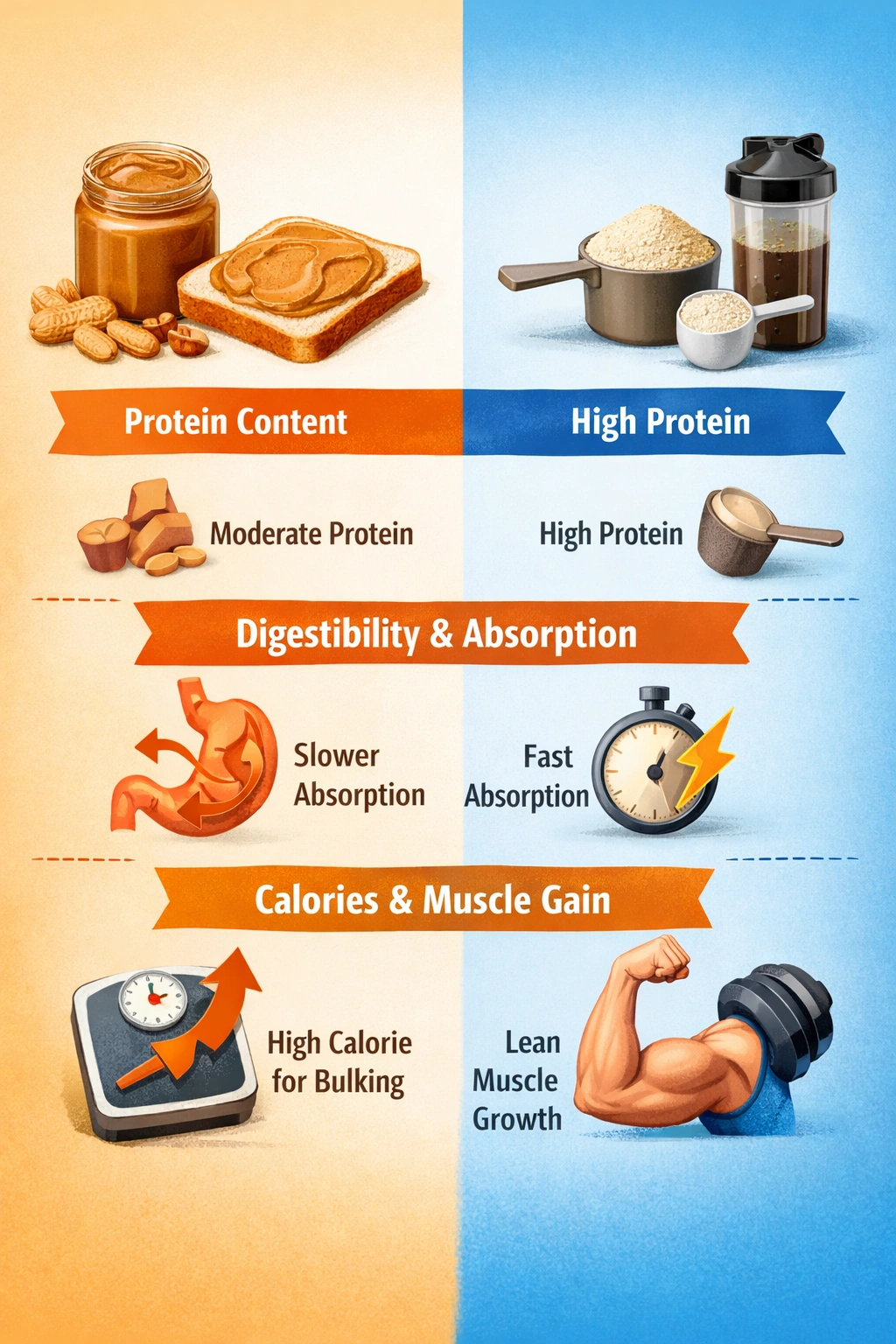
Protein Content Comparison
Concentrated protein supplements deliver more protein per serving, while this nut-based option offers moderate protein with added calories and healthy fats.
Digestibility & Absorption Speed
Fast-digesting protein supplements absorb quickly, making them ideal after workouts. This slower-digesting option provides sustained energy over time.
Calories & Macros Impact on Muscle Gain
This calorie-dense food supports bulking due to its higher calorie content, while protein powder is better for lean muscle gain with controlled calories.
Peanut Butter vs Protein Powder
| Factor | Nut-Based Spread | Protein Powder |
|---|---|---|
| Protein per serving | Moderate | High |
| Calories | High | Low–Moderate |
| Fat content | High (healthy fats) | Low |
| Digestion speed | Slow | Fast |
| Best for | Bulking, snacks | Post-workout, lean muscle |
Which Is Better for Different Fitness Goals?
For Lean Muscle Gain
Protein supplements are more suitable because they deliver high protein with fewer calories.
For Bulking & Weight Gain
Whole-food fat sources like this are more effective because they add calories and protein.
For Beginners vs Advanced Gym-Goers
Beginners benefit from natural food sources, while advanced athletes often prefer protein supplements for precise intake.
Can You Combine Peanut Butter and Protein Powder?
Benefits of Using Both Together
-
Balanced protein, fats, and calories
-
Improved taste and texture
-
Better fullness and sustained energy
Best Times to Consume Them
-
Pre-workout for steady energy
-
Post-workout with whey protein
-
Between meals for calorie support
About Muscle Building Nutrition
Is Peanut Butter Enough Protein for Muscle Building?
This spread contains a decent amount of protein, but it usually cannot meet daily muscle-building protein needs on its own. It works best as a supportive food when combined with milk, eggs, legumes, or protein supplements. This combination helps increase calorie intake while supporting muscle recovery and energy levels.
Is Protein Powder Necessary to Build Muscle?
Protein supplements are not mandatory for muscle growth. Many people build muscle using whole foods alone. However, these supplements offer convenience, precise protein intake, and quick digestion, making it easier to meet daily protein goals.
Which Is Better After Workout – Nut Butter or Protein Powder?
Protein supplements are the better post-workout option because they digest quickly and deliver amino acids directly to the muscles. This slower-digesting food is better suited for meals or snacks.
Is Nut Butter Good for Gym Beginners?
Yes, this natural spread is an excellent option for gym beginners. It is affordable, easy to include in meals, and helps increase calorie intake, which many beginners struggle with when starting strength training.
About Nutrionex Foods
Nutrionex Foods is a nutrition-focused peanut butter manufacturer catering to fitness enthusiasts and health-conscious consumers. The brand offers natural, flavored, jaggery-based, and organic peanut-based products designed to support muscle building, active lifestyles, and clean nutrition without compromising on quality or taste.
Pros and Cons – Natural Food Sources vs Protein Supplements
Pros of Natural Food Sources
-
Natural whole food
-
Rich in healthy fats
-
Supports calorie surplus
Cons of Natural Food Sources
-
Lower protein density
-
High calorie intake if overused
Pros of Protein Supplements
-
High-quality protein source
-
Convenient and fast-digesting
Cons of Protein Supplements
-
Processed product
-
More expensive than whole foods
How to Choose the Right Option for You
Choose natural food sources if your goal is bulking, clean eating, or increasing calories naturally. Choose concentrated protein supplements if you need fast absorption and precise protein intake with controlled calories. Many people see the best results by using both strategically.
To decide what works best for you, consider:
-
Your fitness goal (bulking vs lean muscle gain)
-
Daily calorie and protein requirements
-
Convenience, digestion, and workout timing
Find Peanut Butter For Muscle Builder
Conclusion
Both peanut butter and protein powder support muscle growth in different ways. Protein powder is ideal for lean muscle gain and post-workout recovery, while natural food sources work better for bulking and sustained energy. The best choice depends on your fitness goals or a smart combination of both.
FAQs
1. Is peanut butter good for muscle gain?
Yes, it supports muscle gain by providing calories, healthy fats, and moderate protein.
2. Can I replace protein powder with peanut butter?
Not entirely, as protein powder provides a higher protein concentration.
3. How much nut butter should I eat daily for fitness?
1–2 tablespoons daily is ideal, depending on calorie needs.
4. Is protein powder safe for daily use?
Yes, when consumed within recommended protein limits.
5. Which peanut butter is best for gym workouts?
Natural or organic versions without added sugar work best.