Does Peanut Butter Need Refrigeration After Opening?
Peanut butter is a pantry staple in many homes, but one question keeps coming up: does peanut butter need refrigeration after opening? The answer depends on the type of peanut butter, how you store it, and the environment around you. While some jars stay fresh in the pantry for months, others benefit from refrigeration to keep their texture and flavor intact.
In this guide, we’ll break down everything you need to know about peanut butter storage, from shelf life to food safety rules and even bulk storage for commercial use.
Understanding Peanut Butter Storage Basics
Once you open a jar of peanut butter, it’s exposed to air, moisture, and potential contaminants. These factors can slowly affect its taste, texture, and safety. However, peanut butter is naturally low in moisture, which makes it resistant to bacterial growth compared to many other foods.
The real difference comes down to ingredients. Some peanut butter products contain stabilizers and preservatives, while others are made with just peanuts and salt.
Shelf-Stable Peanut Butter vs Refrigerated Types
- Processed peanut butter: Contains added oils and stabilizers that prevent separation and extend shelf life.
- Natural peanut butter: Made with minimal ingredients, often without preservatives, leading to oil separation and shorter freshness.
- Organic varieties: Similar to natural types, often requiring more careful storage.
These differences play a major role in deciding should you refrigerate peanut butter once opened.
Should You Refrigerate Peanut Butter Once Opened?
The short answer is: it depends. Most commercial peanut butter can safely stay in your pantry, while natural varieties often benefit from refrigeration.
- Processed peanut butter: Safe at room temperature for weeks or months
- Natural or organic peanut butter: Better stored in the fridge after opening
- Hot or humid climates: Refrigeration is recommended regardless of type
Refrigeration helps slow down oil separation and prevents rancidity, especially in warmer regions.
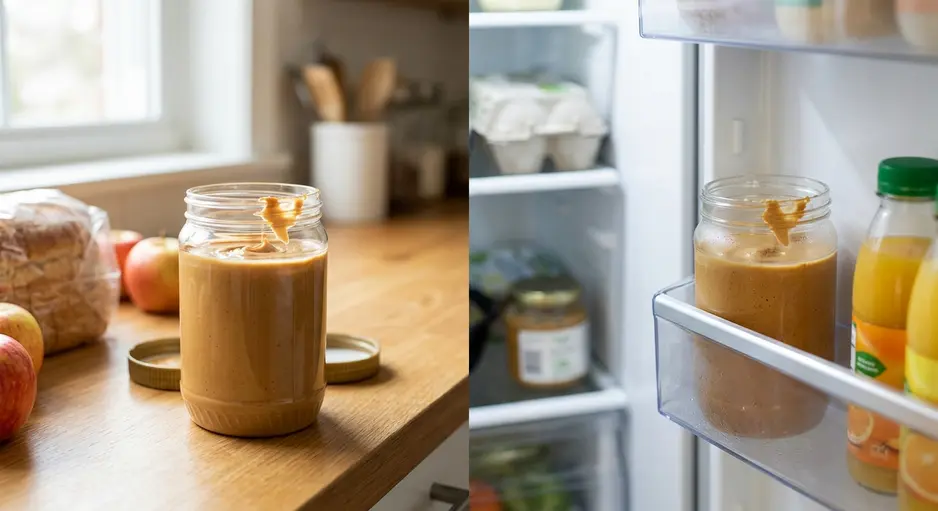
Refrigeration vs Pantry Peanut Butter Taste Difference
There’s a noticeable difference in texture and flavor depending on where you store your peanut butter.
- Refrigerated: Firmer texture, less oil separation, longer freshness
- Pantry-stored: Softer, easier to spread, but may separate over time
Some people prefer the creamy texture of pantry-stored peanut butter, while others value the longer shelf life of refrigerated jars.
Does Natural Peanut Butter Need Refrigeration After Opening?
If you’re using natural peanut butter, refrigeration is strongly recommended. Without stabilizers, the oils separate quickly and can turn rancid if left at room temperature for too long.
This is why many brands include storage instructions on the label, especially for organic products.
Does Organic Peanut Butter Go Bad Without Refrigeration?
Yes, it can. Organic peanut butter lacks preservatives, making it more sensitive to heat and air exposure.
- Unrefrigerated shelf life: Around 1 month in moderate climates
- Refrigerated shelf life: Up to 3–6 months
Proper storage is key to maintaining quality and preventing spoilage.
How to Store Peanut Butter After Opening Safely
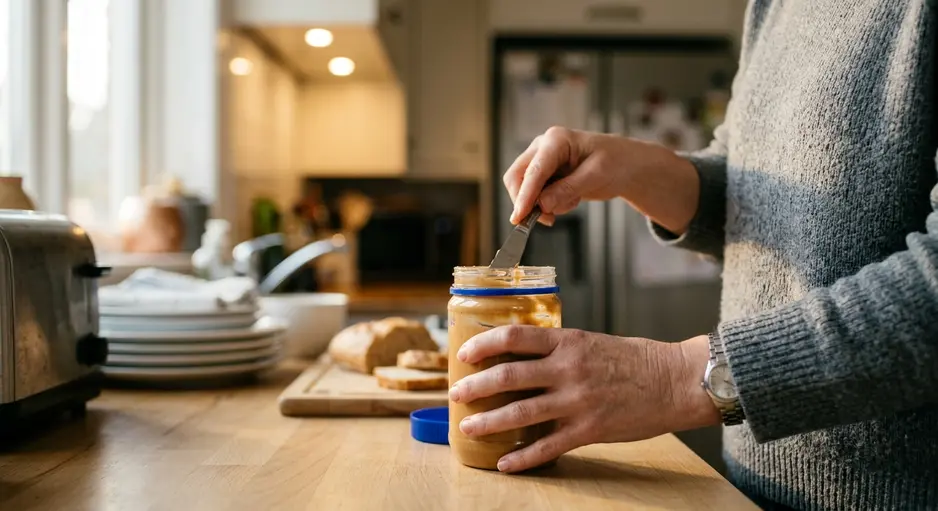
If you want your peanut butter to stay fresh and safe, follow a few simple practices. These apply whether you’re storing a single jar at home or managing stock in a commercial kitchen.
- Keep jars tightly sealed to prevent air exposure
- Store in a cool, dry place away from sunlight
- Use clean, dry utensils to avoid contamination
- Stir natural peanut butter before storage to distribute oils evenly
Understanding how to store peanut butter after opening safely can significantly extend its shelf life.
Food Safety Rules for Storing Peanut Butter After Opening
Food safety standards vary globally, but general guidelines remain consistent.
- Follow FDA guidelines for peanut butter storage in the USA
- Avoid cross-contamination in commercial kitchens
- Store bulk containers in temperature-controlled environments
- Monitor humidity levels to prevent quality degradation
These practices align with global food safety standards for nut butter storage.
Peanut Butter Shelf Life After Opening
The shelf life depends on the type of peanut butter and storage conditions.
- Processed peanut butter: 2–3 months in pantry, longer if refrigerated
- Natural peanut butter: 1 month in pantry, up to 6 months refrigerated
If you’re wondering how long does peanut butter last unrefrigerated, the answer varies based on temperature and exposure.
How Temperature Affects Peanut Butter Quality
Temperature plays a major role in maintaining peanut butter quality.
- Hot climates (UAE, India): Faster oil separation and risk of rancidity
- Cool climates: Longer shelf stability
- High humidity: Can affect packaging and freshness
Managing storage conditions is essential, especially in regions with extreme weather.
Best Storage Conditions for Peanut Butter Products (Commercial & Bulk)
For retailers, distributors, and food service providers, proper storage is even more critical. Large quantities require controlled environments to maintain consistency and safety.
- Store products between 10°C and 21°C
- Avoid direct sunlight and heat sources
- Use sealed, food-grade containers
- Rotate stock using FIFO (First In, First Out)
These practices support efficient peanut butter distribution and storage logistics.
Bulk Peanut Butter Storage Guidelines for Export
Exporting peanut butter requires strict adherence to international standards.
- Follow peanut butter wholesale storage requirements USA
- Maintain consistent temperature during shipping
- Use moisture-resistant packaging
- Comply with peanut butter export shelf stability guidelines
Manufacturers, including those aligned with Nutrionex Foods, focus on maintaining high-quality standards for global markets.
Commercial Peanut Butter Packaging and Refrigeration Needs
Packaging plays a key role in shelf stability and safety.
- Airtight jars and containers reduce oxidation
- Industrial packaging helps preserve bulk quantities
- Refrigeration may be required for natural or specialty products
Choosing the right packaging solutions ensures longer shelf life and better product integrity.
Expert Tips to Extend Peanut Butter Freshness

Simple habits can make a big difference in how long your peanut butter stays fresh.
- Always close the lid tightly after use
- Store jars upside down to reduce oil separation
- Keep away from heat sources like stoves
- Use smaller containers for daily use
Peanut Butter Jar Storage Tips for Hot Climates UAE
In hot regions, extra care is needed to prevent spoilage.
- Refrigerate after opening, even for processed types
- Store in shaded, cool cabinets if refrigeration isn’t available
- Avoid repeated exposure to heat and humidity
These steps help prevent oil rancidity and maintain quality.
Peanut Butter Need Refrigeration After Opening?
Conclusion
So, does peanut butter need refrigeration after opening? The answer depends on the type and your storage conditions. Processed peanut butter can stay in the pantry, while natural and organic varieties benefit from refrigeration.
In warmer climates or commercial settings, refrigeration often provides better quality and longer shelf life. Following proper storage practices ensures your peanut butter stays safe, and ready to use.
Trusted suppliers like Nutrionex Foods focus on producing high-quality, shelf-stable peanut butter that meets global storage and export standards, making them a reliable choice for both consumers and businesses.
FAQs
1. Does peanut butter need refrigeration after opening in the USA?
Most processed peanut butter does not require refrigeration in the USA, but natural types should be refrigerated.
2. What is the shelf life of peanut butter after opening a jar?
It ranges from 1 to 3 months in the pantry and up to 6 months when refrigerated, depending on the type.
3. Does organic peanut butter require refrigeration?
Yes, refrigeration helps extend freshness and prevents oil from going rancid.
4. What are the best storage conditions for peanut butter products?
Store in a cool, dry place, away from sunlight, with tightly sealed containers.
5. Can peanut butter be stored at room temperature safely?
Yes, processed peanut butter can be safely stored at room temperature for a limited time.
6. What are the signs of spoiled peanut butter?
Look for off smells, bitter taste, discoloration, or unusual texture changes.
7. Should restaurants refrigerate peanut butter after opening?
Many restaurants refrigerate natural peanut butter for safety and consistency, especially in warm environments.