Raw Vs Roasted Blanched Peanuts: Which Is Better For Export?
Choosing between raw peanuts and roasted blanched peanuts for international trade is not just a product decision it is a strategic export choice.
Both products serve different segments of the global market. Understanding grading systems, processing standards, shelf life considerations, and regulatory requirements is critical for exporters and global buyers alike. This expert guide breaks down the real-world differences and helps you determine the best peanuts for export raw vs roasted based on your target market.
Understanding Raw Peanuts and Roasted Blanched Peanuts
What Are Raw Peanuts?
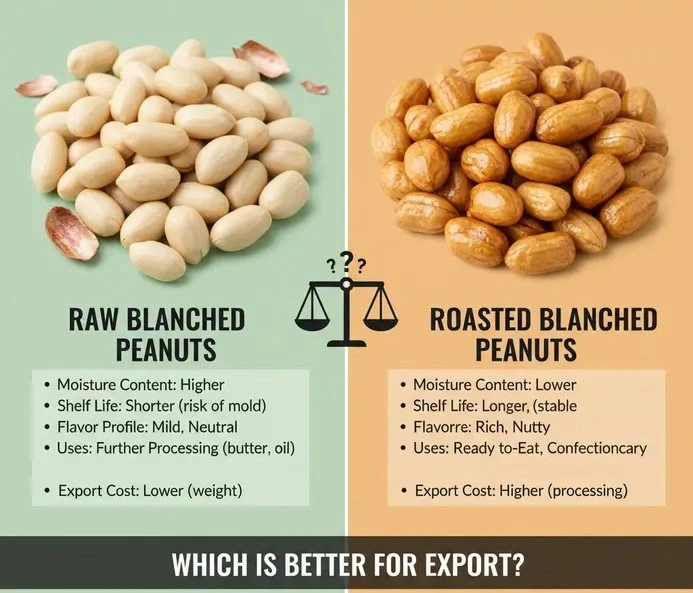
Raw peanuts are unprocessed groundnuts harvested, cleaned, graded, and packed for shipment. For export quality raw peanuts India typically supplies it selected based on buyer specifications and end-use applications.
Moisture content in peanuts for export is critical. The accepted benchmark is 8-10% to prevent fungal growth and aflatoxin contamination during transit. Raw peanut grading standards for export are based on count per ounce, size uniformity, defect tolerance, and laboratory aflatoxin limits.
-
Moisture: Controlled below 10%
-
Defects: Strict tolerance levels
-
Aflatoxin: Must meet EU import requirements for peanuts
What Are Roasted Blanched Peanuts?
Roasted blanched peanuts are kernels that undergo controlled roasting followed by skin removal through the peanut blanching process. The result is a clean, skin-free kernel widely used in food manufacturing.
Modern facilities use advanced peanut processing and blanching equipment including dry roasting ovens, gravity separators, optical sorters, and automated peeling systems. ISO 22000 HACCP peanuts production standards ensure food safety compliance at every stage.
-
Dry blanching: Heat loosens skin for mechanical removal
-
Water blanching: Used in specific industrial applications
-
Optical sorting: Removes discolored kernels
-
Nitrogen flushing: Extends shelf stability
Core Differences Between Raw and Roasted Peanuts
The primary differences lie in processing level, shelf life, pricing, and end-use market. Raw peanuts are a commodity product, while roasted blanched peanuts are value-added.
-
Processing: Minimal vs multi-stage processing
-
Shelf life: Raw peanuts typically last longer under ideal storage
-
Pricing: Roasted blanched peanuts price per tonne bulk is higher due to processing costs
-
Demand: Industrial vs ready-to-eat markets
Export Market Demand
Raw Peanuts for Export - Who Buys Them?
Raw peanuts for export are primarily purchased by oil processors, peanut butter manufacturers, and re-processors in the global market. These buyers prefer handling roasting and processing locally to maintain flavor control.
Bulk peanut shipping and logistics are crucial here. Containers must be moisture-controlled and properly fumigated to meet peanut export regulations India mandates.
Roasted Blanched Peanuts for Food Industry Applications
Roasted blanched peanuts for food industry applications are in high demand among confectionery brands, snack manufacturers, and bakery chains. These buyers seek consistent color, taste, and particle size.
Snack ingredient suppliers prefer bulk blanched peanut kernels for export because they reduce in-house processing costs. This creates opportunities for value-added peanut products for export with stronger margins.
Regional Preferences & Import Requirements for Peanuts
How to export roasted blanched peanuts to global markets requires strict compliance. Aflatoxin testing in peanuts is non-negotiable, and import requirements for peanuts impose some of the lowest permissible toxin limits globally.
-
Mandatory laboratory reports
-
Traceability and lab testing for peanut exports
-
Phytosanitary certification
-
HACCP compliance documentation
Quality Standards & Compliance: What Serious Importers Expect
Raw Peanut Grading & Quality Control
Peanut grading and quality control determine export success.
-
Pre-cleaning and destoning
-
Size grading via sieves
-
Moisture testing
-
Aflatoxin sampling and lab analysis
HACCP Certified Peanut Exporter India - Why It Matters
Partnering with a HACCP-certified peanut exporter in India ensures compliance with ISO 22000 HACCP peanuts standards. Many buyers now require BRC or FDA registration as well.
Food-Grade Packaging for Peanuts
Food-grade packaging for peanuts significantly affects shelf life and buyer satisfaction. Packaging design for exported peanuts should prevent moisture ingress and oxidation.
-
12.5kg or 25kg PP bags with liners
-
Vacuum packaging for premium shipments
-
Nitrogen flushing for roasted kernels
Shelf Life, Storage & Logistics Comparison
What Is the Shelf Life of Roasted Blanched Peanuts?
The shelf life of roasted blanched peanuts typically ranges from 6-12 months under optimal storage. Roasted blanched peanuts shelf life and packaging depend heavily on oxygen exposure control.
Improper storage accelerates fat oxidation and rancidity. Temperature-controlled warehousing is highly recommended.
Raw Peanuts Storage & Bulk Shipping
Raw peanuts require careful moisture management. Groundnut processing for export markets includes drying, sorting, and container desiccant use.
-
Container lining with moisture barriers
-
Desiccant placement
-
Stacking to allow airflow
Cost Implications in Shipping & Handling
The roasted blanched peanuts price per ton bulk includes roasting, blanching, sorting, and packaging costs. However, a higher value often offsets freight expenses through better margins.
Peanut Export Industry
Is It Better to Export Raw Peanuts or Roasted Blanched Peanuts?
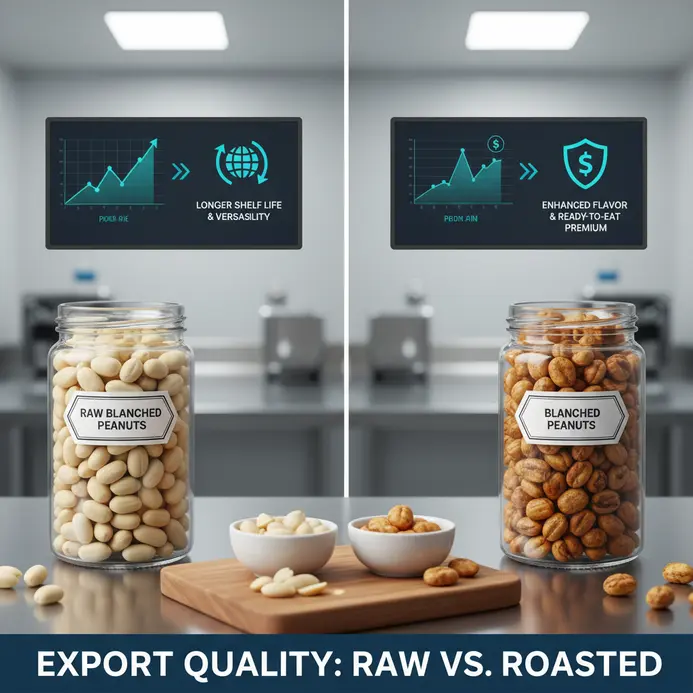
The answer depends on buyer profile and infrastructure. Commodity oil processors prefer raw peanuts, while branded snack manufacturers prefer processed kernels.
Case Study: Supplying Bulk Blanched Peanut
Worked with suppliers of blanched peanut kernels to scale shipments for a snack brand. By improving optical sorting and nitrogen packaging, rejection rates dropped within six months.
Common Exporter Mistakes
-
Ignoring raw peanut grading standards for export
-
Poor traceability systems
-
Weak documentation compliance
Raw vs Roasted Blanched Peanuts: Cost, Profitability & Strategic Advantage
Margin Analysis for Wholesale Suppliers
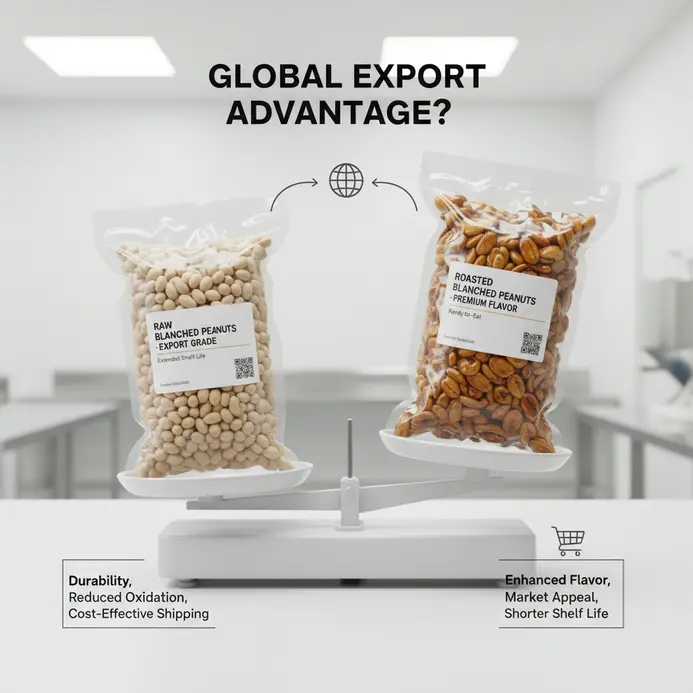
A roasted blanched peanuts wholesale supplier typically achieves stronger margins per-ton due to value addition. Processing ROI improves when operating at scale with automated peanut blanching process systems.
When Are Raw Peanuts the Better Choice?
-
High-volume commodity buyers
-
Markets with lower processing standards
-
Price-sensitive import regions
Best Peanuts for Export Raw vs Roasted
-
Identify buyer segment
-
Assess regulatory complexity
-
Evaluate processing capability
-
Calculate long-term margin potential
Future Trends in Global Peanut Exports
-
Growing demand for value-added peanut products for export
-
Automation in peanut processing and blanching equipment
-
Eco-friendly food-grade packaging for peanuts
-
Stricter aflatoxin testing in peanuts
Import Premium Quality Peanuts
Conclusion
Both raw peanuts and roasted blanched peanuts have strong global demand. The right choice depends on your infrastructure, target market, compliance capability, and profitability goals.
If you aim for commodity-scale exports with lower processing complexity, raw peanuts for export remain a solid option. If your strategy focuses on premium markets, higher margins, and branded buyers, investing in bulk blanched peanut kernels for export offers long-term strategic advantage.
Partner with a HACCP-certified peanut exporter India like Nutrionex Foods to secure consistent quality, compliance, and scalable supply tailored to international standards.
FAQs
1. What Are the Requirements for Export Peanuts?
Strict aflatoxin limits, HACCP compliance, and traceability documentation are mandatory. Exporters must align with peanut export regulations of India standards simultaneously.
2. How Are Raw Peanuts Graded for Export?
Raw peanut grading standards for export include count per ounce, moisture percentage, defect tolerance, and aflatoxin lab testing. Third-party inspections enhance buyer confidence.